Wednesday, 26 November 2014

Climate Warriors Launching Divestment Campaign in the Pacific


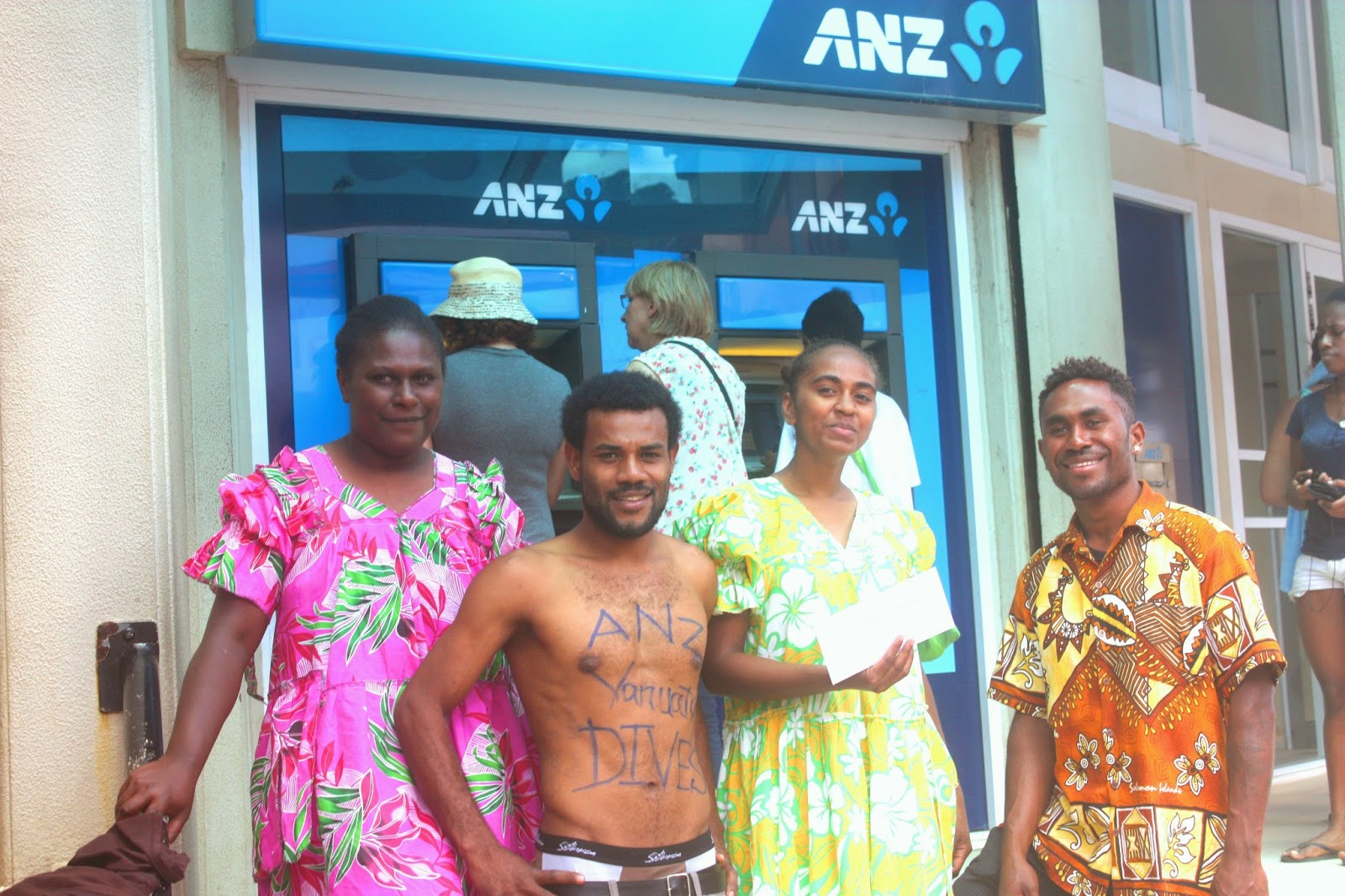
Today, 350 Vanuatu as part of the ‘Pacific Climate Warriors’, are delivering letters to ANZ management asking them to divest from the fossil fuel industry.
 This is part of a new ‘divestment’ campaign being launched in the Pacific by the climate campaigning network, 350 Pacific.
 “We launched this campaign to call on businesses operating in the Pacific to remove all forms of support from the industry - the fossil fuel industry - that will destroy us,” said campaign spokesperson, Ms. Kathy Jetnil-Kijiner, who recently addressed world leaders at the United Nations Climate Summit in September.
 The Climate Warriors are taking their message to ANZ that they must commit to ruling out future loans to fossil fuel projects, and phase out existing loans over a five year- period.
 “Organizations and financial institutions, such as the ANZ, must align their money with their morals. They need to make socially responsible investments because, it is not acceptable to profit from the destruction of our Islands.”
 “While the Pacific Islands may seem small, business for the banks here is profitable and growing. It is a moral imperative that as banks continue to grow in the region; they side with the people, not the polluters,” added Ms. Jetnil-Kijiner.
 Over the past five years, ANZ has invested a total of $6.5 billion in fossil fuel projects, even when it is very clear that these fossil fuels are the greatest man- made contributor to climate change and the destruction of the Pacific.

 “Although many of our friends and families work for ANZ. Our fight is not with them, but with management at ANZ who guide where investments are made.”
 “With everything at stake in the face of climate change for our islands, we have to take every necessary step to protect our island homes,” continued Jetnil- Kijiner.
 “The Divestment campaign has its place in the Pacific. What we are calling for, are institutions and organizations to move their investments from the fossil fuel industry to more renewable and cleaner sources of energy,” she concluded.
 Earlier this year, the Anglican Church of New Zealand and Polynesia became the first in the worldwide Anglican Communion, to pledge to divest from fossil fuel companies, while the College of the Marshall Islands are trying to get their campus to divest their endowment from fossil fuels. If they succeed, they could be the first College in the Pacific Region to divest.

1.     For further information about ANZs investment in the fossil fuel industry, visitwww.marketforces.org.au/banks.
2.     For Immediate Release.
3.     This Divestment Campaign is the next phase of the 350 Pacific Stand Up for the Pacific Campaign, which first saw 30 Pacific Climate Warriors take their message directly to the fossil fuel industry, and blockade the world’s largest coal port, on the 17th of October, 2014.


Tuesday, 20 May 2014

Iasoa Fakaufou Association_ Youths in Agriculture Practice

Youths in Agriculture Practice
Iasoa Fakaufou (Youth) Association was establish in the year 2000 with a majority of Young people in Iasoa village, Futuna Island. In the same year 2000, a host Christmas celebration by elders in Iasoa village (live & known as community leaders) in a small village called 'Nakiroa' 30 minutes walk from the main village of Iasoa.

The youths organize activities mainly social and take up responsibilities told by elders in the community. This active activities includes; Community work (Gardening, house building, Traditional Dancing, Picnics, and fishing practice etc.
In the year 2010 Iasoa community leased a 8 acres of 200m2 x 400m2 piece of land at Makenzie Hills, Teouma Area on the South East of Efate.

The land was leased for Agriculture purpose and community implemented project to support the existing social and major developments back in Futuna island.
In September 2011 we set up a Piggery and Chicken project and later in 2012 the youths participated in a Agriculture training workshop run by the Department of Agriculture and Rural Development.

In 2013, Iasoa Fakaufou Association set up a 160m2 x 160m2 demonstration Plot to start projecting farming technology for practical and was supported by the Department of Agriculture and Rural development and SPC-GIZ climate change Adaptation program for technical assistance.

Youths cleared the area and divided into 5 demonstration plots for different crop Varieties to be
trial for field work Practical using different farming methodology.

Tuesday, 15 April 2014

Day of Action_350 Vanuatu

Futuna Fatuana Cultural Group
The 12 of April 2014 has been agreed by teams across the pacific region as the "Day of Action" in which all pacific climate warriors demonstrate climate action activities inviting and campaigning to #Stand up for the pacific Campaign.

The Day also marks the launching of our big Canoe building project in which Warriors across the region are starting to build traditional style Canoes for their long Journey to Australia on a mission to stop Paul Flyn who is the Managing Director and Chief Executive Officer of Whitehaven Coal Mine from his continuing process of coal extraction.

In Vanuatu, 350 Warriors had organize a public action campaign in which warriors on the same Day roaming around Port Vila asking for public to #Standup for the pacific Campaign in Signing the public petition.

It has been a long Day in the morning when all 350 Vanuatu members approaching public in groups and individual explaining our fight against climate change with 350.org and the Pacific and how important it is for pacific islanders and like Vanuatu to give their support to stand up for the Pacific and for our country itself.
350 Vanuatu member explaining to a youth group what 350 is all about
Since the introduction of 350 Vanuatu in 2011, a lot of people in the government and within our new ministry of Climate Change, Energy, Environment, Meteorology & Geo-hazards with other civil societies working in relation with the Vanuatu government had no idea of the existence of 350 Vanuatu in the country.
However,in the meantime our team have try very hard to include our activities with existing youth group activities in order for the government and people to recognize our existence and significantly the actions we will take in response to our own government and to international movements representing our own country.

In November 2013, 350 Vanuatu has been known to most Youths around the country and through the government, civil societies and local government after the National Youth Symposium in which 350 Vanuatu  was the first to have it's Warrior training with over 30 youth representatives attending.

On our "Day of Action" campaign, we also had a very good chance to talk publicly announcing the #stand up for the pacific Petition and explaining our mission and what we're striving to the fight against climate change with 350 Pacific in an official political Campaign Team for Vanua'aku Pati for the By-election to replace late Patrick crowby after his sudden death in Noumea, New Caledonia.
Members of the Vanua'aku Campaign Team
 The leader of the Vanua'aku Pati Campaign Team told 350 Vanuatu members that they will support our organization if anything happends in Australia during our campaign. Also giving their formal support in signing the petition to #stand up for the Pacific Campaign.

Our 350 Vanuatu booth was set up in the same area where public came to listen to the campaigning team of Vanua'aku pati in which was accepted by them to let public easily sign the petition and ask question if necessarily related.
And with that time being, alot of people were interested and ask many question and wanted to joint the organization and be part of the activities.
350 Vanuatu information Booth
Lunch was provided to 350 Vanuatu members whom are undertaking the action campaign. Although, we have not enough funds to run this activities, we were given an opportunity from the SPC-GIZ climate change Adaptation Program to give us an amount of 30.000VUV to cover some of our expenses.

In the afternoon around 02:00pm, we started the counting of all members of the public who sign the petition sheet and we had a hundred and fifty-one participation supporting our movement.
From there we continue on with the other part of our program which was the launching of our Canoe building project for 350 Vanuatu warriors to actually start building the Canoe.

The program started with a few speeches from the 350 Vanuatu Coordinator, Isso Nihmei who brief publicly on the Canoe project, why were building traditional style canoe's and how were taking it on our Journey to Australia.
350 Vanuatu Coordinator announcing the Canoe project
In one of it's statement made publicly is "were using our traditional style canoes as a mechanism/ tool to communicate with the Australian government, especially to the managing director of the Whitehavens Coal Mining industry that 'we' the people of the Pacific islands are suffering alot and seen clear evidence of this critical issue of climate change".

He continue's to say that "if you do not believe in  climate change then stop complaining to the government to provide relieve after disaster's" and the speech has really amaze most people as young people are taking the initiative to stop coal mining industries and minimize the impacts around the pacific islands.

After the announcement of the Canoe building project, it was followed on with a special traditional dance from the Futuna Fatuana Cultural Group demonstrating the Canoe Dance.
The Dance illustrate the traditional way of transportation for many years till today the pacific islanders still
The Canoe Dance
use traditional canoes for sea transportation in the islands. Canoes in Vanuatu are very useful and many islanders from North and Southern province still use them to travel from one village to another to past message and do gardening.

After the Canoe Dance was also follow by another custom Dance by the same group.

The performances attracts more people and sign in for the petition. Later on after the custom dancing, we had the StringBand continues by Futuna Fatuana Cultural Group. They started the show with a song requested from the Vanuatu Warriors for the Pacific island nation. The song was more about the Pacific islands and how beautiful the pacific islands is from the land to the ocean. The Melanesian, Polynesians and Micronesian People.
Futuna Fatuana String Band Group
 StringBand in Vanuatu is very popular and people likes listening to our local style music.
Thus, we use StringBand music to show the world and especially Australia how we feel about loosing this traditional style music if the impacts of climate Change continues as they expand their coal mining industries.

Although we're not contributing on that much carbon emission, we're the first to feel the effects of climate change.
Most Vanuatu local StringBand group in Vanuatu now write songs about climate Change and sing in public during big occasions and celebration such as in independence Day.
People can talk about climate change in the Kava Bar (Nakamal) during their social activities  after working hours.

We then continue on with the special kava ceremony. In Vanuatu Kava is use traditionally to talk to spirits when drinking on the islands. We invite a few chiefs from the few islands around Vanuatu to join us during this special kava ceremony to talk to their spirits to protect all Pacific warriors during their journey to Australia.
Chief Sam Toropi from Futuna Island opens the ceremony
The kava was dedicated and open by the chief from Futuna island, TAFEA province and share it with the chiefs from the other islands and the public to drink and as a witness from their communities seeing the impacts of climate change in their island and communities.

Chief members joint the kava
From the scene include is the chief from Tongoa Island, Epi Island, Malekula and some members from the public.
After the kava ceremony, 350 coordinator made the last official closing remarks and acknowledge the presents of the public in participating in the activitiy and joining the kava ceremony. He also acknowledge the dancers, and the stringBand music which was really entertaining to the public and 350 Vanuatu really appreciate the time given to come this event. We will continue to organize such activities to build youth and public capacities on climate change and the impacts of it to our communities and our islands.

The closing remarks end and everyone was dismiss........

Tuesday, 11 February 2014

350 Vanuatu

350 Vanuatu 
350 Vanuatu 

350.org is a global climate movement a nd 350 mean safety from the climate crisis.
350 Pacific is a youth led grassroots network working with communities to fight climate change from the Pacific Islands. 350 Pacific works with organizers across 15 Pacific Island nations to highlight the vulnerabilities of our island countries to climate change while showcasing our strength and resilience as a people. We work through existing networks and with a range of partner organisations who share in our vision for the Pacific and the planet. 

Vanuatu as part of the other Pacific Island is also Vulnerable to the impacts of Climate Change but has rich diverse culture within it's communities. 350 Vanuatu is seeking to implement the 350 Pacific strategy with a mission to empower and educate action-focused Pacific Island young people to lead creative actions to:
·         Make their villages and towns more resilient to a changing climate.
·         Join the global movement that is pressuring big polluters and the fossil fuel industry and get the world back on track to 350ppm.
·         Build stronger, more connected fossil free communities across the Pacific; not just within the Pacific Islands, but across the world.

350 Vanuatu Warrior
The Vanuatu Phase 2 events proposed here include both mobilizations and summits and are directly linked to our campaign strategies and are critical movement moments. This proposal gives Vanuatu 350 the opportunity to grow the community of engaged climate activists, empowering new leaders with skills and strategic plans, and mobilizing young leaders. Importantly, the proposed plan submitted here is not a series of isolated events.  Rather they are a chance to build on or launch large-scale climate campaigns and empower people to lead local action groups that can contribute to escalating action and supporting Vanuatu’s nation and the Pacific’s regional climate strategies.
Our National and Regional Key Priorities over the coming three years will use the Warrior theme across our initiatives, and also continue with the campaign name of “100% Possible to be Heard”.  350 Vanuatu’s top priorities are:
1.       Embolden Pacific Island leaders and government leadership and interventions on the international stage on climate change
2.       Take direct action to challenge the Fossil Fuel Industry
3.       Build and display cultural strength of the Pacific Islands
4.       Empower young people to build local resilience to climate change impacts
5.       Tell and share stories from both the frontlines of climate change impacts and the movement response
                                

Teouma Farmers Association Trained In Food Preservation To Adapt To Climate Change

Friday 7th of February 2014, SPC-GIZ Vanuatu
This week, the Teouma Farmers Association on the island of Efate, Vanuatu, received their first ever training in solar food drying and preservation for adaptation to climate change.
Rural communities are coming under pressure as climate change impacts on agricultural productivity are becoming more evident –rainfall, cyclones and heat, shifting weather patterns, and soil degradation are becoming serious hazards to local food security.  The Teouma Farmers Association has over 100 members all of whom contribute to the supply of local products to Port Vila’s main market and to area hotels and resorts. Much of the local foods consumed in Port Vila derive from Teouma, and sadly climate change is severely affecting production there.
Women Farmers with their new preserve food for food security
The SPC-GIZ Coping with Climate Change in the Pacific Island Region programme has, in partnership with local government agencies and NGOs, been implementing a food preservation training courses for the past two years. With the help of island-based expert Ni-Vanuatu trainers, the people of Teouma got the chance to construct a sustainable solar food dryer, and learned to produce a variety of fruit, nut and vegetable products.
The solar food dryer is a simple and inexpensive wooden construct using two small solar panels and two fans in the inside of the dryer.  The dryer works as the fans push hot dry air evenly over the local foods. The dryer can operate even in the cloudy weather conditions common in Vanuatu.
Teouma Community members were educated about climate change and its consequences on food security. Subsequently they were trained not only in the preparation of foods for drying, but also of a range of other preserved products, such as jams, juices and chips. Finally they packaged their products and learned how to appropriately price and market them. They were made aware of the advantage of preserved food not only in terms of a secure food supply, but also increased income possibilities.
This first-ever food preservation training was gratefully received by the Teouma community at large.   “It is greatly useful to be able to store food for times of need. That way we will also save on travel expenses, as we do not have to rush to sell fresh food in the market”, says Pierre Tapisop, Chief of a neighbouring community. “This opens new possibilities to us, as with the option to preserve food, we will have much less waste than in the past”, agrees Charlie Willie, chairman of the Teouma Farming Association.
In response to the question as to how they will invest income from their dried agricultural products, all answered in unison: “school fees”!

Monday, 10 February 2014

Internship with SPC-GIZ Climate Change Adaptation Programmed

SPC-GIZ Climate Change Vanuatu Team
Pacific Island Countries (PICs) are hit hard by climate change due to the high vulnerability and
insufficient adaptation abilities. The predicted sea-level rise, changes in precipitation patterns and rising temperatures will have negative effects on these countries. Coastal erosion, salt water intrusion, changes to cyclone, and changing ecosystems place a heavy burden on the sustainable development of the PICs.
The ‘Coping with climate change in the Pacific Island Region (CCCPIR)’ programme aims to strengthen the capacities of Pacific member countries and regional organisations to cope with the impacts of climate change. The programme is funded by the government of the Federal Republic of Germany through the Federal Ministry for Economic Cooperation and Development (BMZ) and implemented through GIZ working in partnership with SPC and SPREP.

The programme commenced its activities in
2009 working with Fiji, Tonga and Vanuatu.
As of 2011 it has been expanded to another
nine Pacific Island Countries and the
duration has been extended until 2015.
At the regional level, the project aligns with
the Pacific Island Framework for Action on
Climate Change 2006-2015 (PIFACC)

In Vanuatu, the CCCPIR programme has enabled mainstreaming at the national level including an
amendment of the Environmental Management & Conservation Act and its associated Regulations. In addition the programme supported climate integration in the new National Curriculum Statement. A draft National Climate Change Adaptation Strategy is nearing completion and national endorsement after months of stakeholder consultations and expert technical inputs throughout the country and across sectors. CCCPIR is currently involved in the mainstreaming of an amendment to the Foreshore Development Act.

 At the sectoral level, CCCPIR has completed a revision and mainstreaming of the National Forest
Policy, and is working with the National Provident Fund to mainstream a new Livestock Investment
Scheme. Recently CCCPIR has initiated a programme to mainstream climate change considerations into land use planning including the development of a draft National Land Use Planning Policy, and revising the Land Lease Issuance Process to include CCA & DRR considerations. CCCPIR hasAt the sectoral level, CCCPIR has completed a revision and mainstreaming of the National Forest Policy, and is working with the National Provident Fund to mainstream a new Livestock Investment Scheme. Recently CCCPIR has initiated a programme to mainstream climate change considerations into land use planning including the development of a draft National Land Use Planning Policy, and revising the Land Lease Issuance Process to include CCA & DRR considerations. CCCPIR has also
developed a draft National Climate Change Communication Strategy. Recently the Vanuatu
programme has joined forces with the Vanuatu Meteorology Services to develop Seasonal Climate
Forecasts with adaptation advice to farmers.

The Vanuatu CCCPIR programme has begun the design of a national climate change information database which will enable the collection and dissemination of climate change reports, project proposals, V&A assessments and stakeholder contacts.
Informed members and skilled trainers of the different sectors of the society are the basis for a sustainable change. Specific activities in Vanuatu have included the training of departmental directors and DGs, training of journalists, GIS trainings for land sector officials, training for agriculture extension officers, training of lecturers and teachers, and practical training on CC adaptation with communities. The programme has developed Vanuatu’s first Bislama-language DVD on Climate Change in Vanuatu, disseminated to over 30 islands and over 100 communities in Vanuatu

Wednesday, 30 October 2013

National Youth Symposium on Climate Change

Youths in Vanuatu getting ready for action against Climate Change
National Youth Climate Change symposium is jointly organized by the Government of Vanuatu through the National Advisory Board (NAB) in partnership with many other civil societies and international organizations including Save the Children, National Youth Council, 350 Vanuatu, Care International, Wan Smol Bag theater (WSB), VCAN, Oxfarm and SPC-GIZ Climate Change Adaptation Program.

Vanuatu is a small island developing nation vulnerable to the unavoidable impacts of climate change. Sea level rise, more regular extremes in weather patterns causing drought and heavier rainfalls as well as the likelihood of higher intensity of cyclones all present challenges that will require people to prepare for uncertainty and be able to adapt.
Children and young people have the potential to make a very real contribution to climate change responses and disaster risk reduction.

The picture on the right shows youth participated during the Climate Change Symposium on a post with their planting materials "Vertiver grass (Vetiveria zizanioides)" for their gardening to prevent soil erosion and coastal erosion when they get back to their communities.

Highlight Activities 
1. Debate
On the first Day of the conference seen the youths being on a panelist to discuss on the topic "Traditional knowledge is Compatible with Scientific knowledge of Weather and Climate" which let youths on a basis of modern and traditional competition to give possible and straight weather and climate indicator's in their communities.
"Go For" Challenger sharing his experience on a traditional perspective
 in his community of Torres Island 

The youth participants were given a chance to speak of their experience on accessing the information's on whether traditional indicators or through radio and other western technology and how accurate is the information's being used the people of Vanuatu.
In fact both sides mention positive comments and share experiences on the information's access for their daily activities within their communities to do gardening, fishing and livestock.

In the end, comments were made clear as youths sharing their experience on the effects of climate change in their specific area and communities, thus panelist who also are specialist made no charges and come up with final key options for youths to make decision's so agreements was to combine both traditional knowledge and scientific knowledge as changes of the climate is seen realistic and shift calendars from normal existent.